


Ask a driving enthusiast to describe what they remember most about a great car, and they will almost never lead with the horsepower figure or the zero-to-sixty time. They will describe the sound. The way the engine note climbed through the gears on a particular stretch of road. The moment the exhaust cracked and popped on a lift. The low, physical vibration that settled into the cabin at idle and told you, before you touched the throttle, that something serious was about to happen.
Engine sound is not incidental to the experience of driving a great car. For enthusiasts, it is central to it. Understanding why that is the case, and which vehicles deliver it most completely, is the starting point for anyone approaching a luxury car rental decision with sound as a genuine priority.
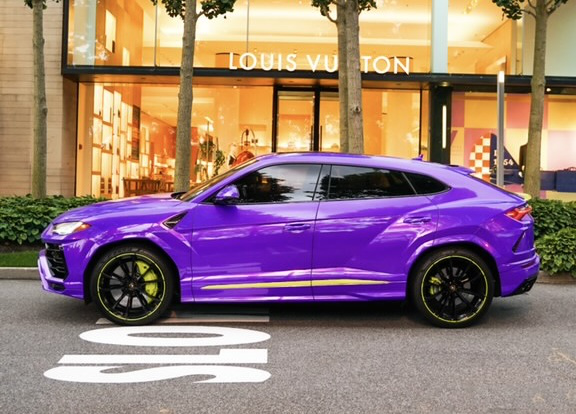
The relationship between engine sound and driving enjoyment is not simply aesthetic. The sound of the engine has a profound psychological effect on the driver, adding to the sense of connection and immersion, and for many enthusiasts it is a signature part of what makes exotic cars so special.
This is not accidental. Car companies are well aware of how engine sounds influence people, and the sound an engine produces is not simply a side effect of performance but has been deliberately crafted to please the ear of enthusiasts. Ferrari, Porsche, and BMW spend significant time fine-tuning exhausts, intake valves, and engine layouts to produce a signature and immediately identifiable sound.
The result is that when you sit in the cabin of a well-engineered exotic and bring the engine to life, what you hear has been shaped with the same intentionality as the suspension geometry or the aerodynamic profile. It is engineering in service of emotion, and it works.
Among enthusiasts, few debates generate more discussion than the difference in character between naturally aspirated and turbocharged engines, and much of that debate comes back to sound.
A naturally aspirated engine builds its note linearly and honestly. As the revs climb, the sound grows in direct proportion, producing a continuous and escalating experience that communicates exactly what is happening mechanically. Lamborghini’s chief technical officer has emphasized that naturally aspirated engines produce a more emotional sound than typical sports cars built with turbocharged engines, and this is a view shared by most serious enthusiasts.
Turbocharged engines deliver their power differently and sound different as a result. The turbo adds complexity to the note — boost buildup, compressor whine, wastegate discharge — that creates its own character. It is not inferior to the naturally aspirated experience, but it is distinct, and for many drivers it represents a different emotional register entirely.
Both have strong advocates, and the right choice depends entirely on what kind of sonic experience the driver is seeking.
The Ferrari California T occupies an interesting position in the sound conversation. It is a turbocharged Ferrari, which places it on the more nuanced end of the sonic spectrum compared to Ferrari’s naturally aspirated models, but it delivers something that most turbocharged cars cannot match: genuine Ferrari character in the exhaust note at every point in the rev range.
Ferrari’s engines are designed to deliver more than just power — they are created to produce a sound that matches the car’s incredible performance, and Ferrari has long been associated with high-pitched, melodic sounds that are exhilarating whether on the racetrack or cruising through city streets. The California T carries that tradition into a more accessible package, making it one of the most compelling entry points to the Ferrari sound experience available in the Tunnel Vision Elite fleet.
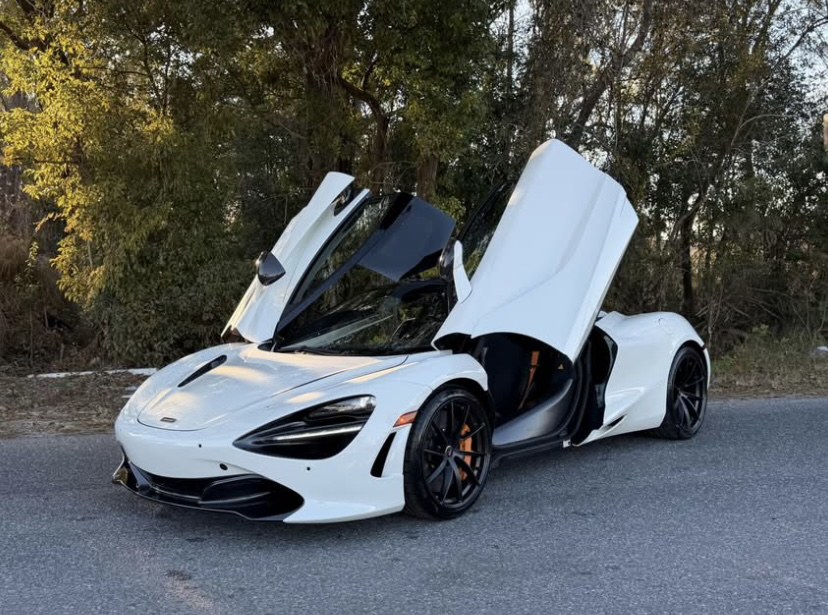
Among the supercar community, the sound of a McLaren engine will never be mistaken for that of a Ferrari or a Lamborghini — McLaren works very hard to make its sound bespoke, and noise is considered a big part of a car’s character.
The McLaren 720S Spider in the Tunnel Vision Elite fleet demonstrates exactly what that commitment produces. The McLaren 720S features an active exhaust system that adjusts the exhaust tone depending on driving conditions, opening and closing valves to create different sound profiles — a quieter ride in comfort mode and a more aggressive tone in sports mode. The result is a car that can behave differently depending on what the driver wants from it, which is a form of versatility that goes well beyond the usual performance metrics.
With the roof down on the 720S Spider, the acoustic experience is completely unmediated. The engine is behind you, the sky is above you, and what you hear is one of the most carefully engineered sounds in the modern automotive world with nothing between it and your ears.
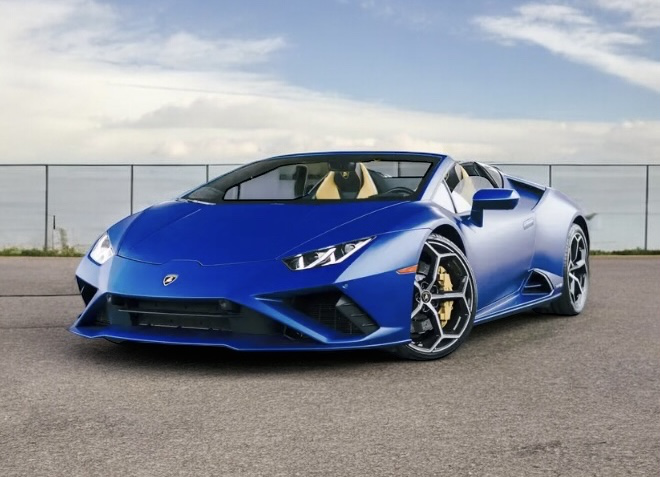
If the McLaren represents precision and control in its acoustic engineering, the Lamborghini Huracan EVO Spyder represents something more primal.
The Huracan’s naturally aspirated V10 produces a sound that builds continuously from idle to redline with a directness and intensity that turbocharged cars cannot fully replicate. It is loud in the way that matters to enthusiasts — not simply high in volume, but rich in character, with a layered, mechanical quality that communicates the mechanical events happening inside the engine in real time.
Lamborghini offers a more primal experience, where the sound of its engines creates an aggressive roar that demands attention on the road. In an open-top configuration like the Spyder, that roar fills the cabin and the surrounding environment simultaneously, producing an experience that is genuinely difficult to replicate in any other context.
The Porsche 911’s flat-six engine produces one of the most immediately recognizable sounds in automotive history. It is not the loudest or the most dramatic note available, but it has a mechanical precision and a distinctiveness that enthusiasts respond to with a consistency that speaks to how well the sound fits the car’s character.
Where a Lamborghini announces itself, the 911 communicates. The note builds with the kind of purposeful escalation that reflects the car’s engineering philosophy — everything in service of the driving experience, nothing wasted or exaggerated. For enthusiasts who value honesty in a machine as much as outright drama, the 911 delivers a sound that rewards sustained attention in a way that more theatrical cars sometimes do not.
The only way to truly understand what engine sound contributes to a driving experience is to experience it. Browse the full Tunnel Vision Elite fleet and contact Tunnel Vision Elite to book your supercar rental in NYC and hear what performance actually sounds like.